(Re)defining the Hulk in The Immortal Hulk 1

by Drew Baumgartner

The Immortal Hulk 1

This article contains SPOILERS. If you haven’t read the issue yet, proceed at your own risk!

It might be stating the obvious to suggest that the Hulk’s identity is fraught, but I don’t mean it in the Jungian dualistic sense. Obviously, the tension between Bruce Banner and the Hulk is the primary source of drama for the character, but the Hulk has long suffered from a different kind of identity crisis, in that no two writers ever seem to agree on who and what he is. Is he a senseless destructive force, or is he capable of reason? Is he a monosyllabic brute, or a brilliant physicist? I’ve only occasionally checked in on Hulk’s solo series over the past five or so years, and I’ve seen takes that pretty much run the gamut, if that’s any indication of how rapidly and wildly consecutive runs can change the character. And to be clear, I don’t necessarily see this as a weakness — I’d argue that the flexibility of superheroes to fit the themes different creative teams are most interested in exploring is a huge part of their longevity — but I do think it demands a strong statement of purpose at the start of a run; something to clarify exactly what kind of Hulk we should expect to see. Something like Al Ewing and Joe Bennett’s The Immortal Hulk 1, which introduces the specifics of this particular iteration with remarkable efficiency. Continue reading

Justice and Symbolism in Justice League 1

By Drew Baumgartner

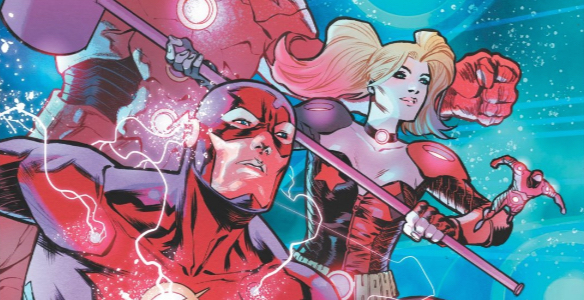
Justice League 1

This article contains SPOILERS. If you haven’t read the issue yet, proceed at your own risk!

There was no word for justice on my planet. The closest was the symbol on this table. It meant going beyond what was supposed to be possible, the natural laws. Imposing on the universe a higher standard. An ideal.

Martian Manhunter, Justice League 1

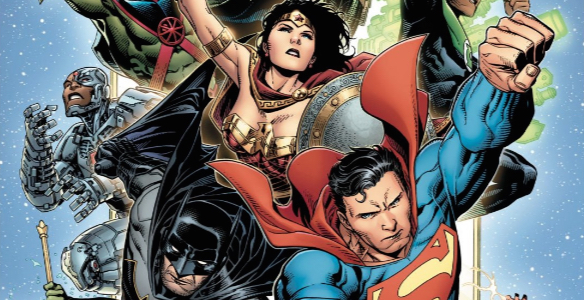
Our conceptions of justice hinge on fairness and impartiality — the notion that we are all held to the same standards of behavior (and face the same punishment for flaunting those standards). We understand how that can break down in practice (humans aren’t great at partiality), but we can imagine justice as a kind of platonic ideal we can strive towards. And that may be the best way to think about it, but closer inspection reminds us that, if it’s a platonic ideal, it’s one that varies from society to society and changes over time. We might reflect on the “justice” of the past (or of other cultures) and find it to be decidedly unjust, but that’s not how justice works — it’s not an objective monolith, but a deeply subjective, dynamic concept. That is, justice is a moral construct that only makes sense in light of the values of the society that construct it. Martian Manhunter’s approximation of justice reflects that idea, adding no moral spin to the “ideal” he mentions — in J’onn’s estimation, any ideologically motivated action “beyond what was supposed to be possible” is justice. In short, J’onn’s brief for the Justice League works just as well for the Legion of Doom. Continue reading

Man of Steel 2: Discussion

by Michael DeLaney and Drew Baumgartner

This article contains SPOILERS. If you haven’t read the issue yet, proceed at your own risk!

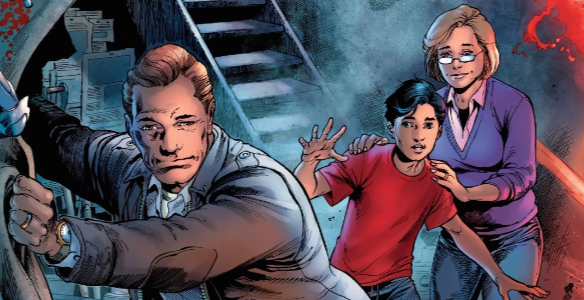
Michael: Batman is a subject that frequents many pages of my sketchbooks and I assume everyone else’s.  Unlike the versatile Batman, I find that Superman is a harder character to draw, especially in his facial features. The face of Superman has to simultaneously convey strength, joy and a decent amount of charm. Thus far, I am enjoying Brian Michael Bendis’ depiction of Superman, and in Man of Steel 2, he is joined by 3 artists who tap into that Clark Kent Charm. Continue reading

Marvel Two-In-One 6: Discussion

by Taylor Anderson and Drew Baumgartner

This article contains SPOILERS. If you haven’t read the issue yet, proceed at your own risk!

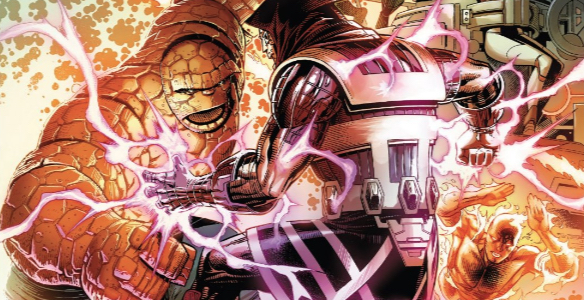
Taylor: Sometimes I’ll come home after work and my wife will ask me how my day was. Usually, I have something interesting to tell her, but occasionally there simply isn’t anything all that remarkable to say. In these cases, my response to her query is that is was “just a day.” See, the thing is, if you do anything enough times it’s bound to become rote every now and then. This same idea certainly holds true with monthly comics, with most series producing “just an issue” that isn’t all that remarkable. Such is the case with Marvel Two-In-One 6, which notable only for how generic it feels.

Continue reading

The Colors Tell the Story in Quantum and Woody 6

by Drew Baumgartner

Quantum and Woody 6

This article contains SPOILERS. If you haven’t read the issue yet, proceed at your own risk!

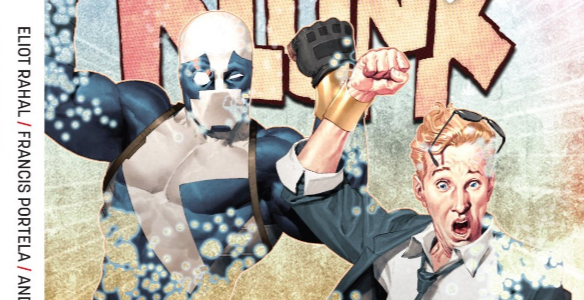
Our sense of color is intuitive, but I think that makes it harder for comics colorists to achieve true verisimilitude. Readers may not have a sophisticated understanding of color theory, but they still know when something looks wrong. And “wrong” can be anything from shadows and highlights to textures to atmospheric effects. We might only be able to articulate the most attention-getting aspects of comics coloring, but subtler choices have a profound impact on the believability of the art. Those choices can be simple, as they are in Quantum and Woody 6, but it’s the skill with which colorist Andrew Dalhouse pulls them off that ultimately makes them work. Continue reading

Thrillingly Putting the Pieces in Place in Saga 52

by Drew Baumgartner

Saga 52

This article contains SPOILERS. If you haven’t read the issue yet, proceed at your own risk!

In this game, Fischer (playing Black) demonstrates noteworthy innovation and improvisation. Byrne (playing White), after a standard opening, makes a seemingly minor mistake on move 11, losing tempo by moving the same piece twice. Fischer pounces, with brilliant sacrificial play, culminating in an incredible queen sacrifice on move 17. Byrne captures the queen, but Fischer gets far too much material for it – a rook, two bishops, and a pawn. At the end, Fischer’s pieces coordinate to force checkmate, while Byrne’s queen sits, helpless, at the other end of the board.

Bobby Fischer’s Breakthrough: The Game of the Century

When someone says a chapter of a story is “putting the pieces in place,” it’s usually meant to point out some emotional shortcoming. Putting the pieces in place is seen as perfunctory, a perhaps necessary prelude to the actual drama to come, lacking in any real emotional investment (and maybe even drawing our attention to the invisible hand guiding circumstances into position). But I think that attitude is entirely shortsighted, privileging the fallout of events more than the setup, and ignoring that the “pieces” and “places” are the raw materials for drama, so how and why they’re there are essential story elements. It’s the kind of attitude that would make Bobby Fischer’s famous “Game of the Century” is only thrilling in its final moments, as he finally forced Byrne’s king into checkmate, but any chess fan can tell you that the ending was set up 21 moves earlier, which in turn may have been set up six moves earlier still, reminding us that the simple act of moving pieces on the board is what drives the drama in a game of chess. Obviously, Saga isn’t a game, and the characters aren’t chess pieces (royalty notwithstanding), but it’s just a thrilling to watch them scoot into attack position — even when we can’t see the attack coming. Continue reading

Doomsday Clock 5 Meanders

By Drew Baumgartner

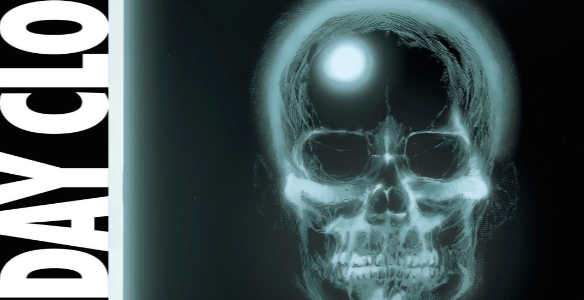
Doomsday Clock 5

This article contains SPOILERS. If you haven’t read the issue yet, proceed at your own risk!

The essence of drama, and especially melodrama, is compression. Show only what’s important. So start the scene as late as possible and once the dramatic point is made, end it.

Dennis O’Neil, The DC Comics Guide to Writing Comics

Pound for pound, this might be some of the best writing advice I know. But in this age of sequels, prequels, spin-offs and tie-ins, it seems like it’s all but been forgotten. That is, the artistic discipline of narrative efficiency is no match for the commercial demands of more familiar content. I don’t mean to dismiss all sequels etc. out of hand (The Godfather: Part II is a goddamned masterpiece, and is both a sequel and a prequel), but I do think they need to work a bit harder to justify their existence — if the details of this prequel story truly are essential, why weren’t they included in the original. And that scrutiny goes double when augmenting a beloved masterpiece. It’s absolutely possible for a sequel to justify itself, even under those circumstances (again, The Godfather: Part II), but it’s no easy feat. Unfortunately, the longer Doomsday Clock wears on, the less it seems up to that task, not only failing to justify its existence, but pretty much every storytelling choice it makes. Continue reading

Justice League: No Justice 4: Discussion

by Drew Baumgartner and Spencer Irwin

Justice League No Justice 4

This article contains SPOILERS. If you haven’t read the issue yet, proceed at your own risk!

Everything changes here!

Comics solicit, traditional

Drew: Okay, that epigraph is maybe too cute by half, but seriously, what does it mean for “everything” to change? The closest parallel I can draw to real life is the conventional wisdom that “a baby changes everything,” but even then, we understand “everything” to be decidedly limited in its scope. Certain events might be life-changing, but only for those with some connection to said events. And yet: comics. Big crossover events are promoted with the promise that the events with change “everything,” and while we might understand “everything” to be limited to the folks involved (in the same way that it is for a birth), there’s also tons of details we might assume exempt from “everything,” from the laws of physics to the peculiarities of english grammar — some things never change. Even so: some comics events are bigger than others, so there’s a range of just what “everything” means. Maybe it’s interpersonal dynamics of the superheroes involved, maybe it’s the principles of the universe as we know it. In its finale, Justice League: No Justice reveals that it falls almost entirely into that latter category, sending the DC Universe into decidedly uncharted territory. Continue reading

Shifting the Narrative in Hunt for Wolverine: Mystery in Madripoor 1

by Drew Baumgartner

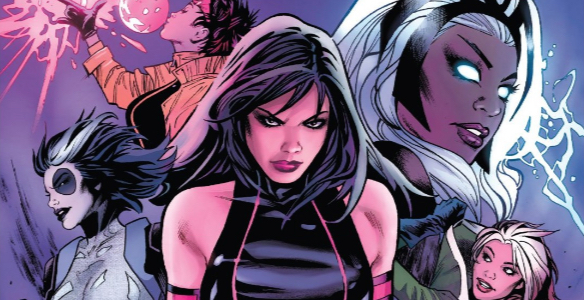
Hunt for Wolverine Mystery in Mardipoor 1

This article contains SPOILERS. If you haven’t read the issue yet, proceed at your own risk!

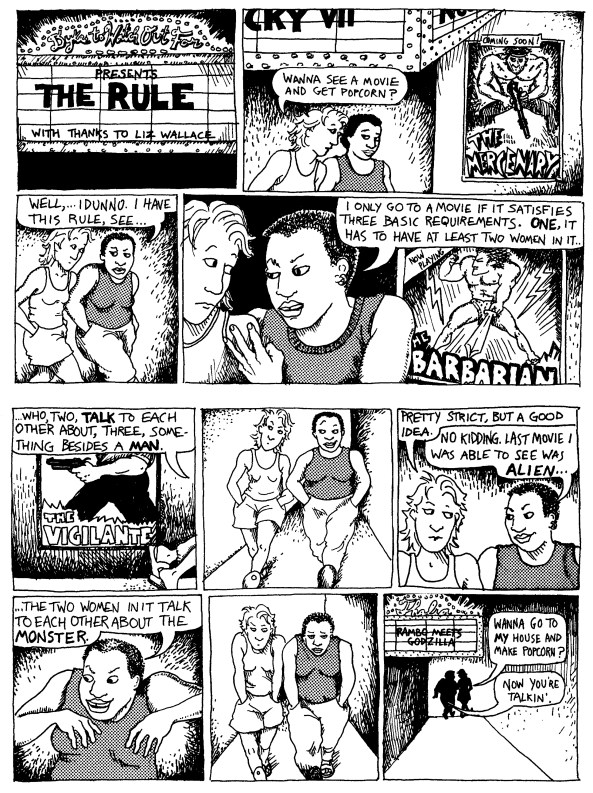
The Bechdel Test

Drew: This particular Dykes to Watch Our For premiered in 1985, and its premise is still ringing in the ears of writers and readers everywhere. Now known as “The Bechdel Test,” these criteria insist on something beyond simple representation (though it’s remarkable how many films fail to satisfy even that first requirement), aiming for a dialogue that features no males (even as subjects of conversation). And that last bit is a huge stumbling block for narratives to this day. Plenty will feature two women and even manage to put them in a scene together, but the conversation will still revolve around the male characters. It’s the kind of problem you might expect to plague any all-female tie-in to the “Hunt for Wolverine” event to suffer from — Logan is necessarily absent, but that fact is likely to be the subject of discussion — but Jim Zub and Thony Silas manage to shift the focus in Mystery in Madripoor 1, pulling the story in totally unexpected directions. Continue reading

A Big Goodbye in Invincible Iron Man 600

by Drew Baumgartner

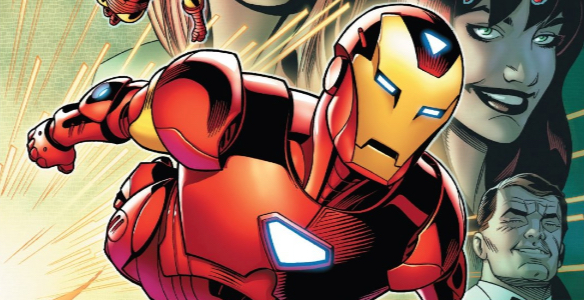
Invincible Iron Man 600

This article containers SPOILERS. If you haven’t read the issue yet, proceed at your own risk.

Grant Morrison Animal Man

The ends of long creator runs in comics are a strange thing — an ending that isn’t an ending, a goodbye that isn’t a goodbye — but are also relatively commonplace. Indeed, those “final issues” are common enough to create a kind of map of morphologies, from those that send the characters in bold new directions to those that more or less put things back to neutral. One of the most common features, though, is that writers step out from behind the curtain to acknowledge their own departure. Some do this in a self-consciously postmodern way (a la Animal Man 26, excerpted above), but any hint of goodbye from the creative team breaks the fourth wall at least a little. We’ve written about plenty of those final issues over the years, but none quite as final as Invincible Iron Man 600, which isn’t just the finale of Brian Michael Bendis’s three-year run with the series, but of his 18-year run with Marvel. That is, he’s not just saying goodbye to the cast of Invincible Iron Man, but the Marvel Universe as a whole, which demands some kind of acknowledgement, which Bendis of course puts his trademark spin on. Continue reading